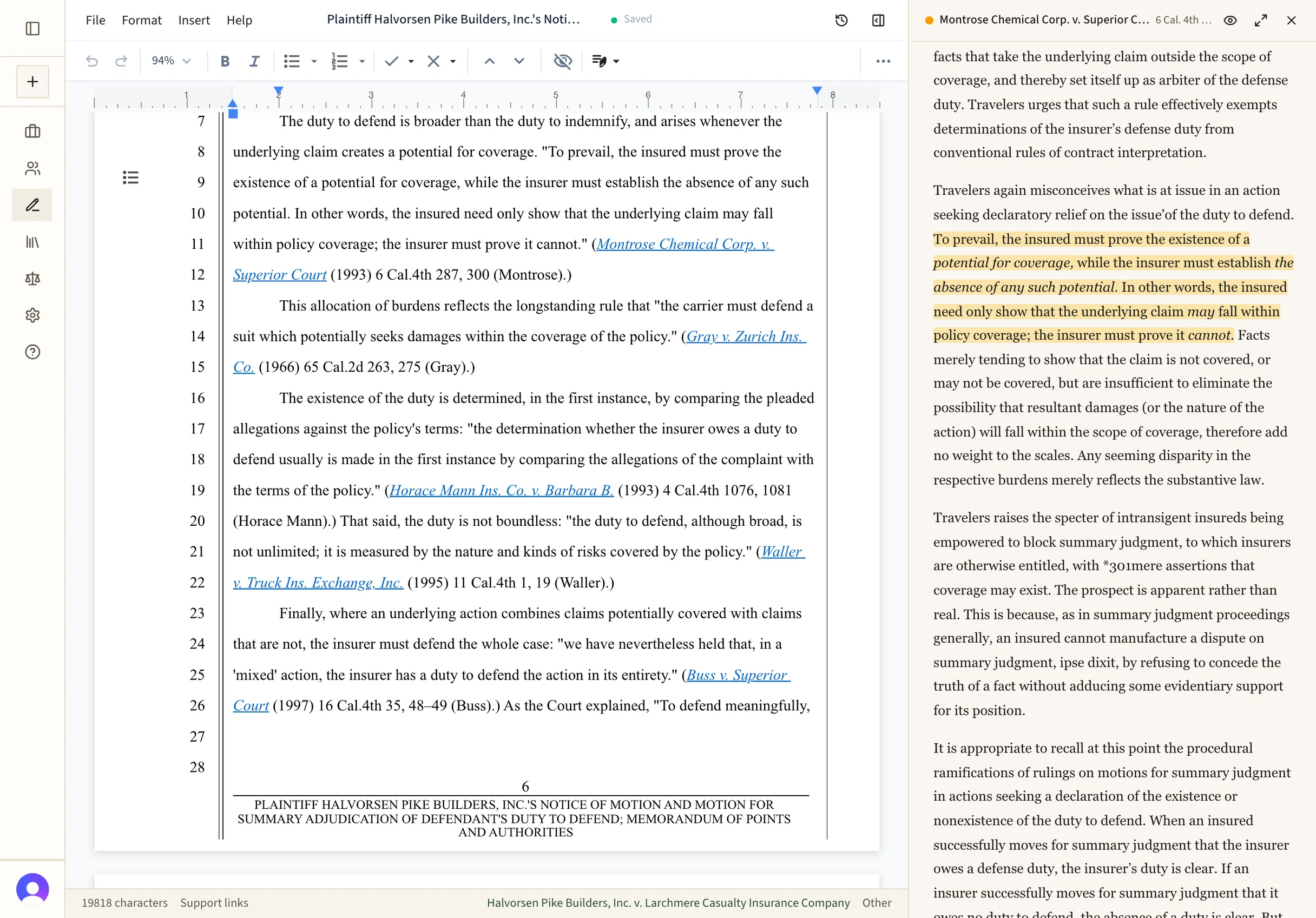
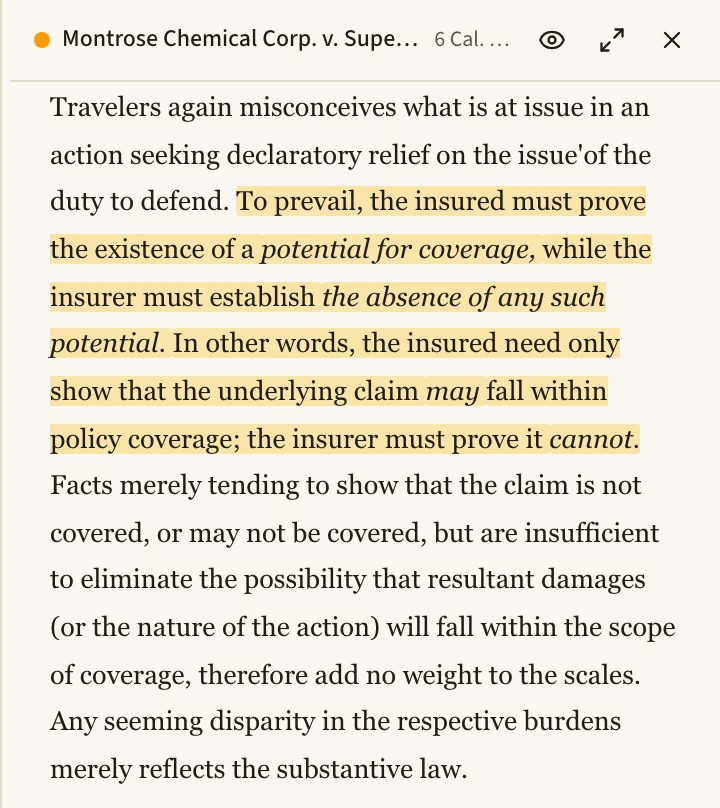
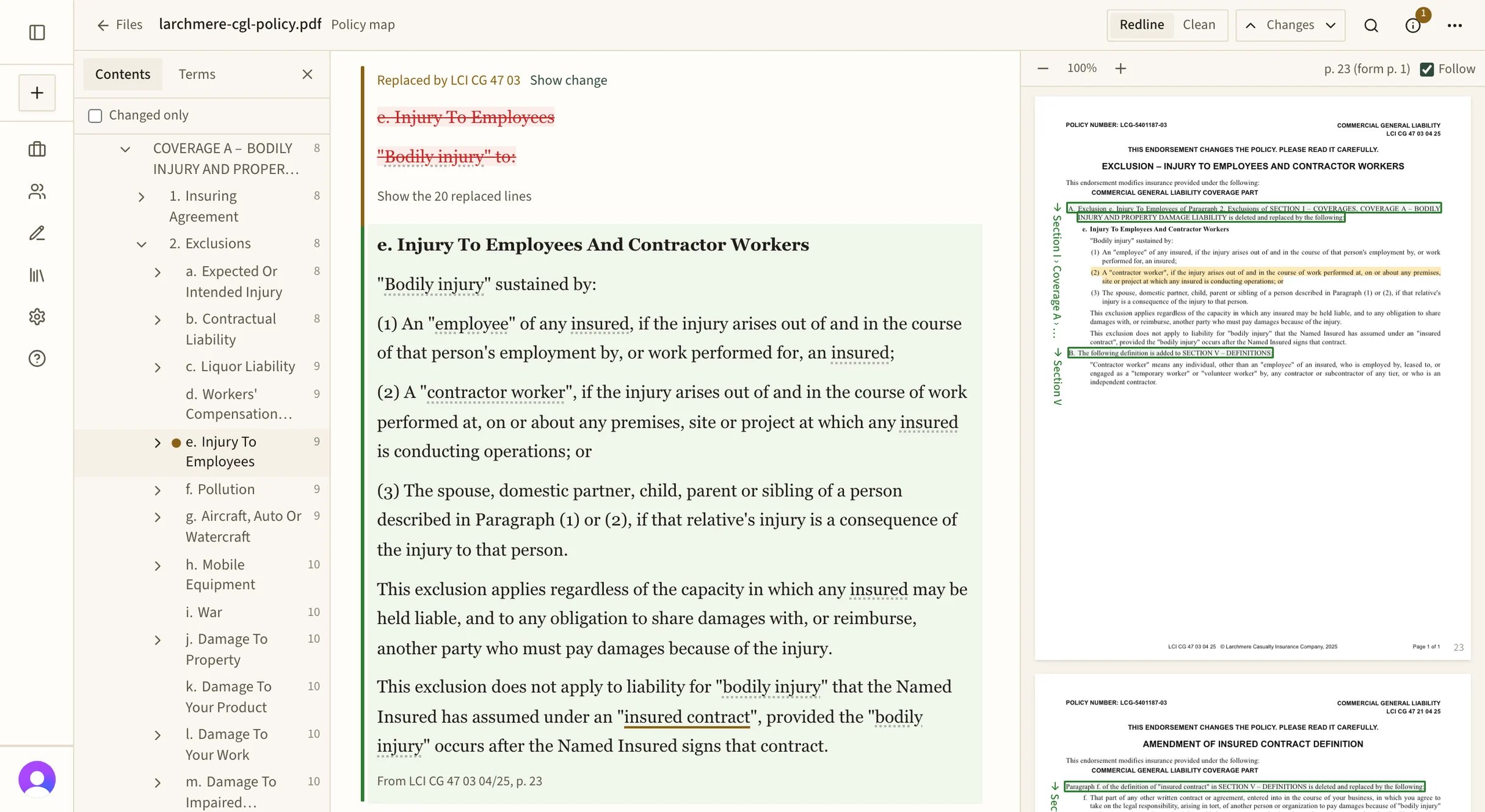
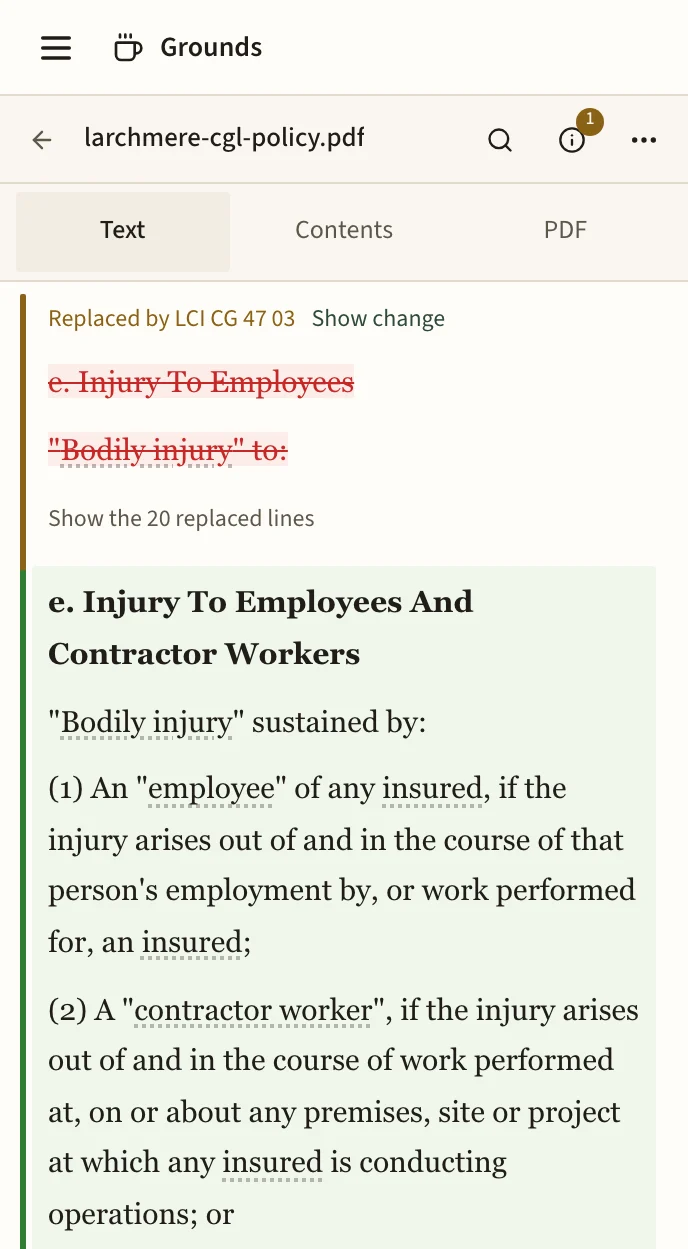
Grounds reads every document in your case file, remembers facts across conversations, and drafts litigation documents that follow your judge's standing orders.
No credit card required. 14-day free trial.
Capabilities
Workflow
Drop PDFs and Word documents. AI extracts text, classifies documents, and organizes them into litigation folders automatically.
Chat naturally about your case. The AI reads documents on demand, remembers key facts, and builds persistent matter memory.
Ask for any document type. The AI drafts it with full knowledge of your case facts, judge procedures, and local rules.
Grounds runs on Amazon Bedrock, which provides a contractual guarantee of zero data retention. Your prompts and completions are not stored by the model provider, are not used for training, and are not accessible to anyone.
This means conversations with Grounds can remain within attorney-client privilege — the same way a conversation with a human associate would.
Consult your jurisdiction's ethics rules. We provide the infrastructure; you make the privilege determination.
Pricing
No per-query fees. No hidden token markups.
Per user
Unlimited conversations, drafting, and editor access
Per matter
Case file storage, client portal, deadline tracking
AI inference
Passed through at Amazon Bedrock rates, zero markup
Example
Solo practitioner with 10 active matters: $49 + $290 + ~$30 in tokens = ~$369/mo. Compare to 10 hours of associate time at $350/hr = $3,500.
Cancel anytime. No contracts. Volume discounts for 10+ users.
Amazon Bedrock provides contractual guarantees that prompts and completions are not stored after inference. Your data passes through the model and is immediately discarded. AWS does not use your data for model training or improvement. Your case file data is stored in our encrypted database — only the AI inference layer has zero retention.
We believe it does not when using zero-data-retention infrastructure, but this is a jurisdiction-specific determination. The key analysis is whether the communication remains confidential — with zero retention, no third party stores or accesses the content. Consult your state bar's ethics guidance.
17+ litigation document types including engagement letters, litigation holds, complaints, answers, motions, discovery requests and responses, demand letters, meet-and-confer letters, deposition outlines, mediation briefs, notices, settlement agreements, trial briefs, appellate briefs, memos, and letters.
The AI stores key facts, parties, issues, strategies, deadlines, and decisions in structured matter memory. This persists across all conversations for that matter, so you never have to re-explain your case. Tell it once that the client's biggest concern is custody of the dog, and it remembers that three weeks later when drafting the settlement proposal.
AI inference costs are passed through at Amazon Bedrock's published per-token rates with no markup. Typical drafting sessions cost $0.10-0.50 depending on document length and case file size. A busy month of active litigation might cost $20-50 in tokens per matter.
Yes. Grounds supports multi-tenant firm organizations with role-based access. Each firm member gets their own login with shared access to firm matters and documents. Ethical wall enforcement is built in for conflict-of-interest compliance.
PDF and Word documents (.docx), plus plain text and Markdown files. Text is automatically extracted, and documents are organized into 13 standard litigation folders with AI-generated titles and summaries.
Start your 14-day free trial. No credit card required.