About
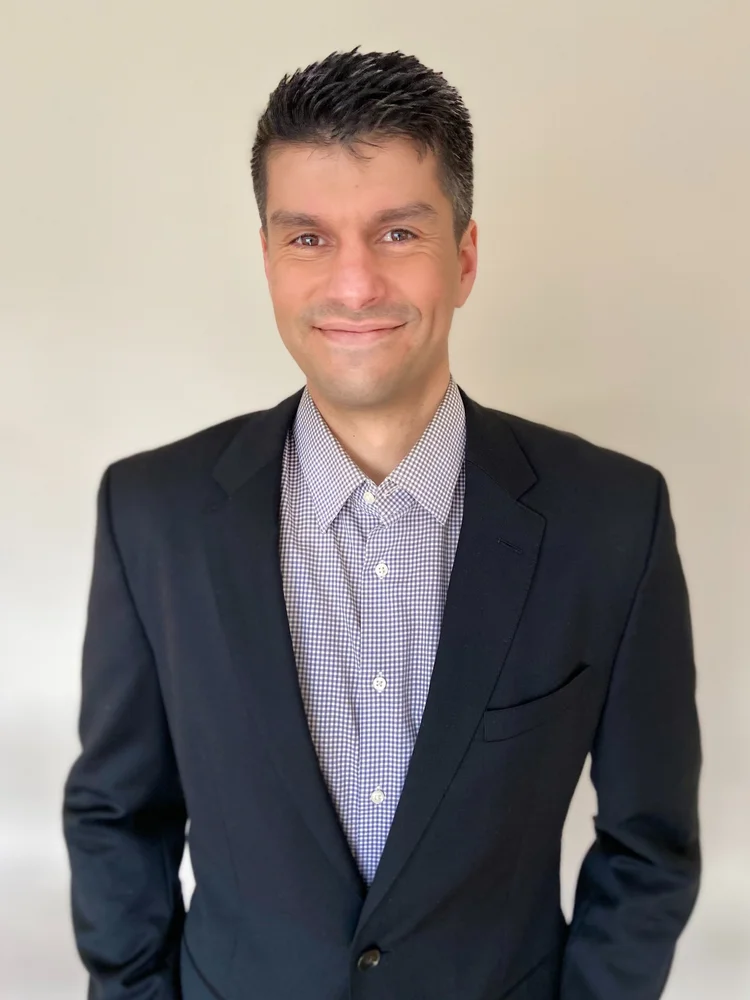
Founder
Joe Wilbert is an AI researcher, developer, and recovering lawyer. He founded Grounds to build AI whose reasons can be checked for fidelity: fidelity to source material, and fidelity to the internal mechanisms of the AI systems themselves.
He has been training neural networks since the late 2010s, when he built a convolutional network that distinguished the formatting of certain court filings and worked on language models for legal reasoning. (The latter frankly failed, for several reasons, including that the technology simply wasn't ready.)
In the early 2020s he developed and trained a hand-gesture classifier from data collection through deployment. It powers OwnDevice, an application that lets people control their computers with touchless hand gestures instead of a mouse and keyboard. From 2022 to 2024 he experimented with the idea of an “internet of AI assistants” and ran negotiation experiments in which agents with their own goals, tools, and memories bargained on behalf of different parties. In 2025 and 2026, while still practicing law, he built Grounds Workspace end to end and uses it in his own cases.
As of September 2026, Joe's full-time work is Grounds. He has also practiced intellectual property and insurance coverage law, most recently as a partner at Lopez, Bark & Schulz, LLP. Before that he was a law clerk to the Honorable Andrew J. Guilford in California federal court, an associate at Irell & Manella LLP, and the founder of the firm that eventually became Lopez Bark.
Last but not least, Joe has produced house and trance music for twenty years and will nerd out with you on production, creativity, and how AI relates to human art.
The bet
Much of the field has questioned whether fully reverse-engineering a neural network is even feasible. We believe it is feasible, that it is the most important route to safe AI, and that it is an unprecedented opportunity for scientific progress. Grounds is therefore working toward an actual understanding of what a network computes and why, with the goal of automating that work so it scales. Ultimately, we seek to understand computational minds, and in doing so, to better understand the nature of our own reality.
Contact
If you work on interpretability, or you run a company that needs AI whose reasons can be checked, write to me.