Cited cases open beside your draft, at the passage they quote

Grounds for Law keeps a matter's pleadings, discovery and drafts in one place. The AI searches state and federal law, drafts on your firm's pleading paper, and cites cases, statutes and produced documents with links that open the source at the quoted words.

Built by Joe Wilbert, a lawyer who also writes the code.
Discuss your firm's workspace See a cited case open

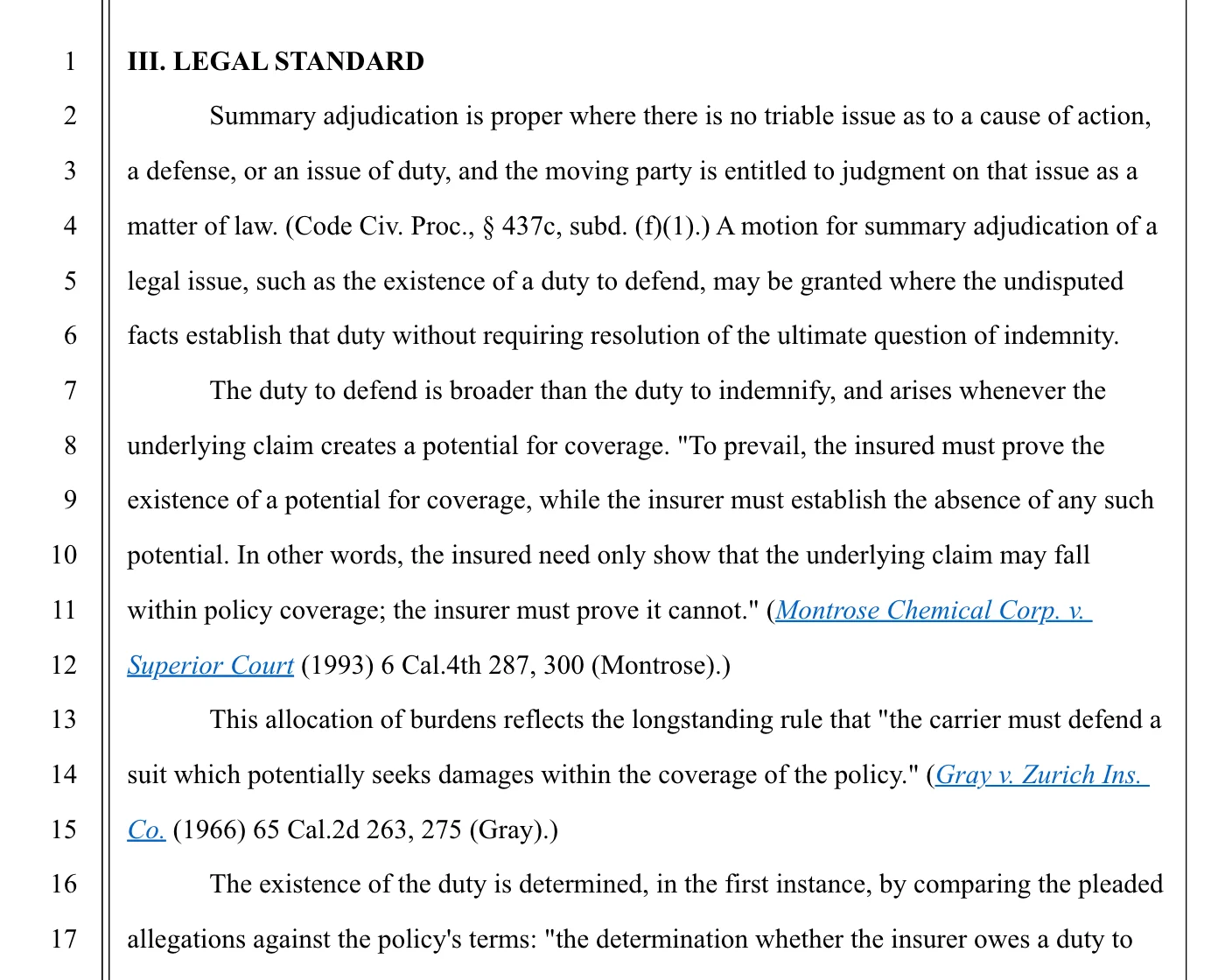
A motion for summary adjudication in the Grounds editor on pleading paper, with line numbers down the left and a case citation in its text.
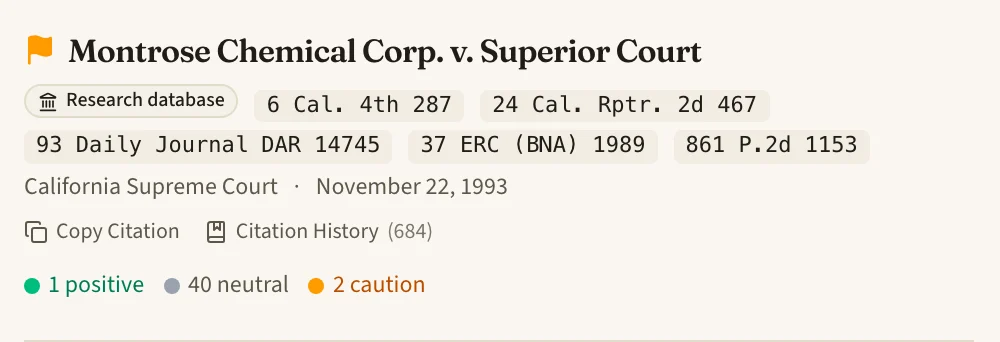
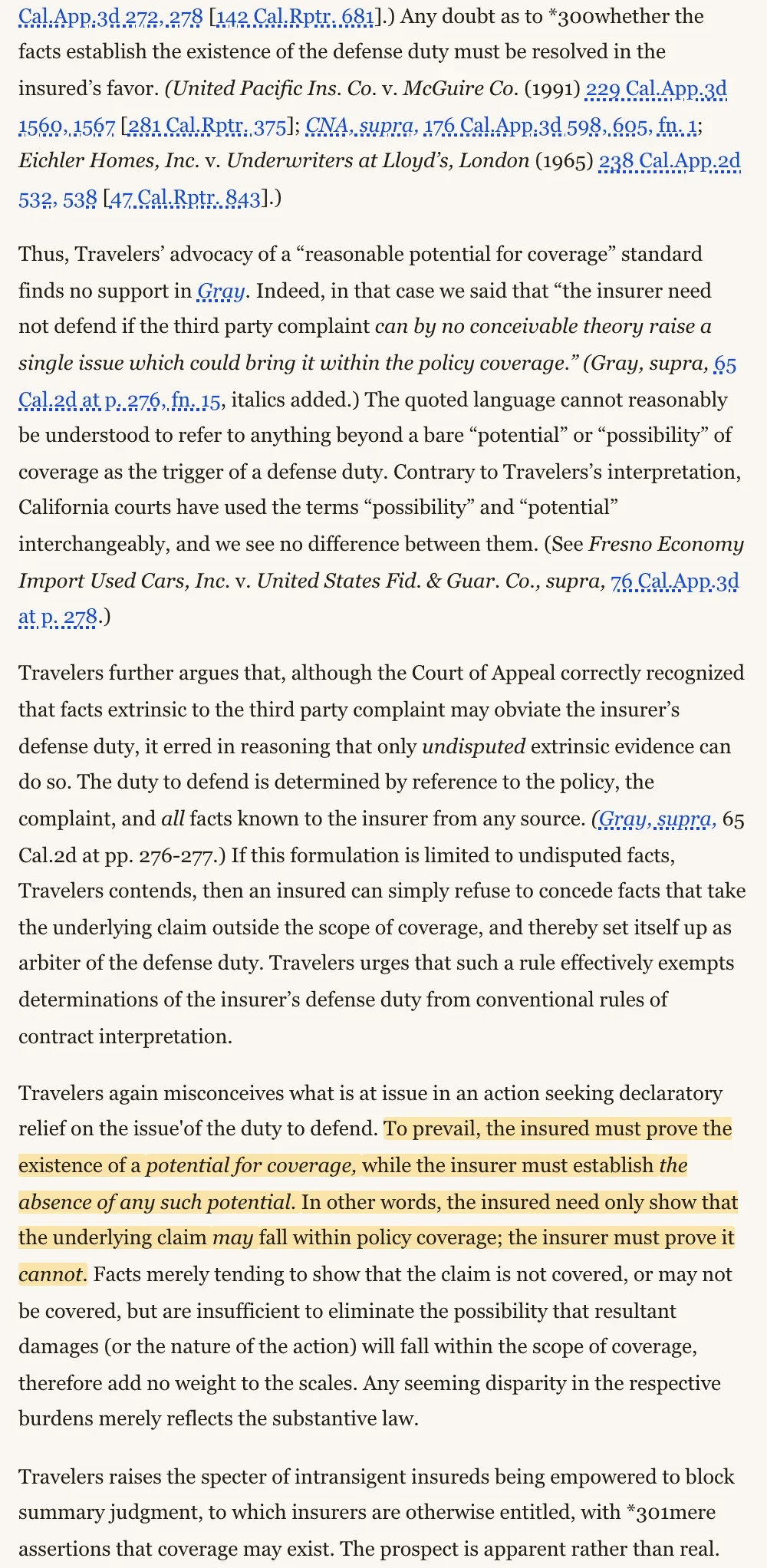
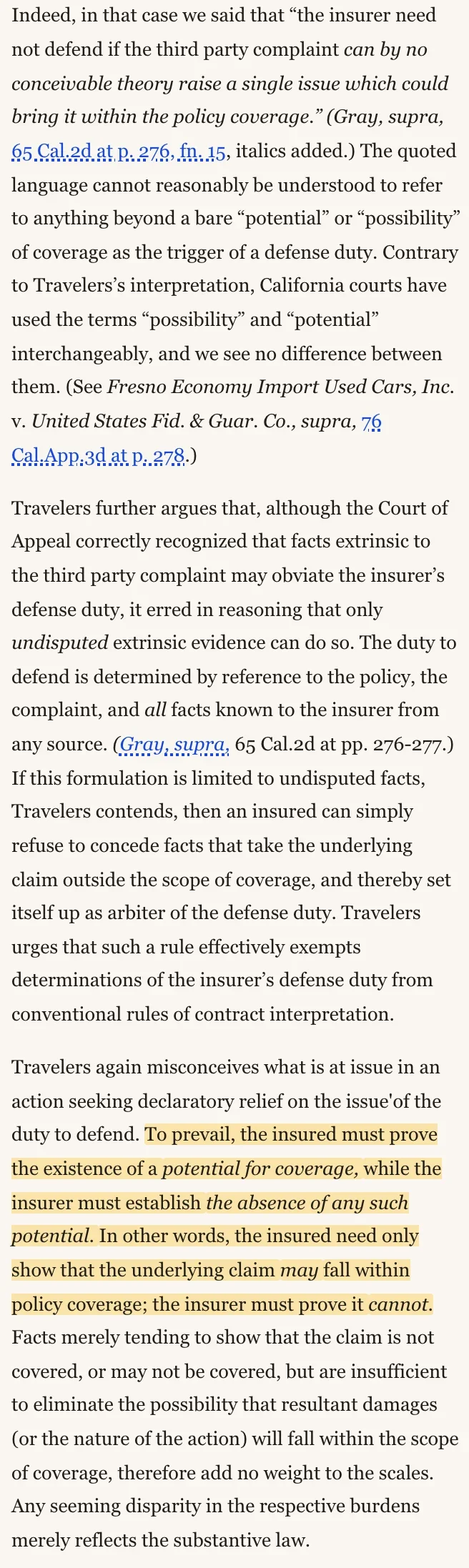
A California Supreme Court opinion open in the side panel: the case name, parallel citations, court and date at the top, then the opinion text scrolled to a highlighted passage.
A motion in an invented coverage case, Halvorsen Pike Builders v. Larchmere Casualty, on the firm's own pleading paper. The citation's link carries the words it quotes, and clicking it opens the opinion beside the draft at the quoted passage. The opinion is public. The firm, the parties and the motion are made up.The opinion cited in an invented coverage motion, opened at the passage the motion quotes. The opinion is public. The firm, the parties and the motion are made up.

The AI searches our case law database, and its citations are checked after each answer

Grounds for Law has its own database of state and federal court opinions, with statutes and regulations for all 50 states, DC and federal law. Search it yourself, paste a citation to jump straight to the case, and read the full opinion with its star pages. Where our treatment analysis has run, flags show when later cases questioned, distinguished or overruled a case.

In chat or in the editor, the AI searches the same database, opens the opinions, and cites them with links that carry the exact words it relied on. It's instructed not to cite a case it couldn't find there. After a chat answer, the citations and quotations are checked against the sources, and the count sits under it: citations checked, verified, quotes located and quotes not found.

Verified means the case is in our database under the name it was cited by, and a located quote means its words are in the case. Whether the case supports the point is still a lawyer's call.
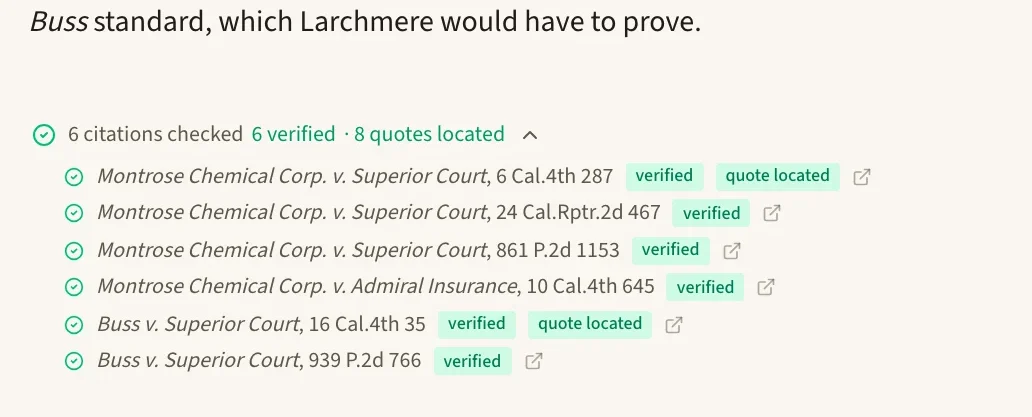
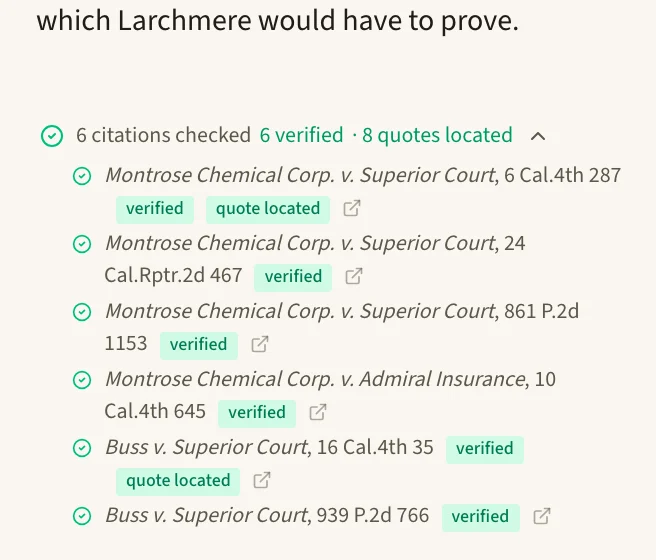
The line under a chat answer reporting how many citations were checked and verified and how many quotes were located, expanded into a list of each citation and its status.The end of a chat answer about the duty to defend, with the line under it counting the citations checked and verified and the quotes located, expanded into a list of each citation and its status.
The line under an answer, opened to list each citation it checked. Each line opens the source it names. The cases are public, and the matter in the answer is invented.
  • Select a sentence in a draft and Authority finds cases that support it, each with a quoted passage, a pin cite, and whether it binds your court.
  • Find Supporting Sources goes through a whole draft and links each citation and quotation it can confirm against the database and the matter's documents.
  • A statute citation opens at the subsection it names, with the cases that cite the section.

The production you received last week is a source for the brief you're writing this week

Load a production with its DAT, OPT or LFP load files, and the Bates numbers and metadata come across intact. Loose files work too: ZIP, PST and MBOX files are expanded, duplicates are set aside, and email threads are put back together.

Review in the same matter: coding, tags, notes, terms-and-connectors search with proximity, and redaction you can preview as the other side will receive it. The AI scores each document for relevance, privilege and hot content as a first pass, and reviewers make the calls.

Then use it. Ask about the production in chat and the answer cites the documents it relied on, each link opening the document at the quoted passage. When you draft, you can choose documents, tags or a whole production as sources.

Productions go out with Bates-stamped images, natives, text and load files, privileged documents withheld behind slip sheets, and a share link with a password, an expiry date and a download limit. Legal holds track notices and acknowledgements, and the audit log records who did what.
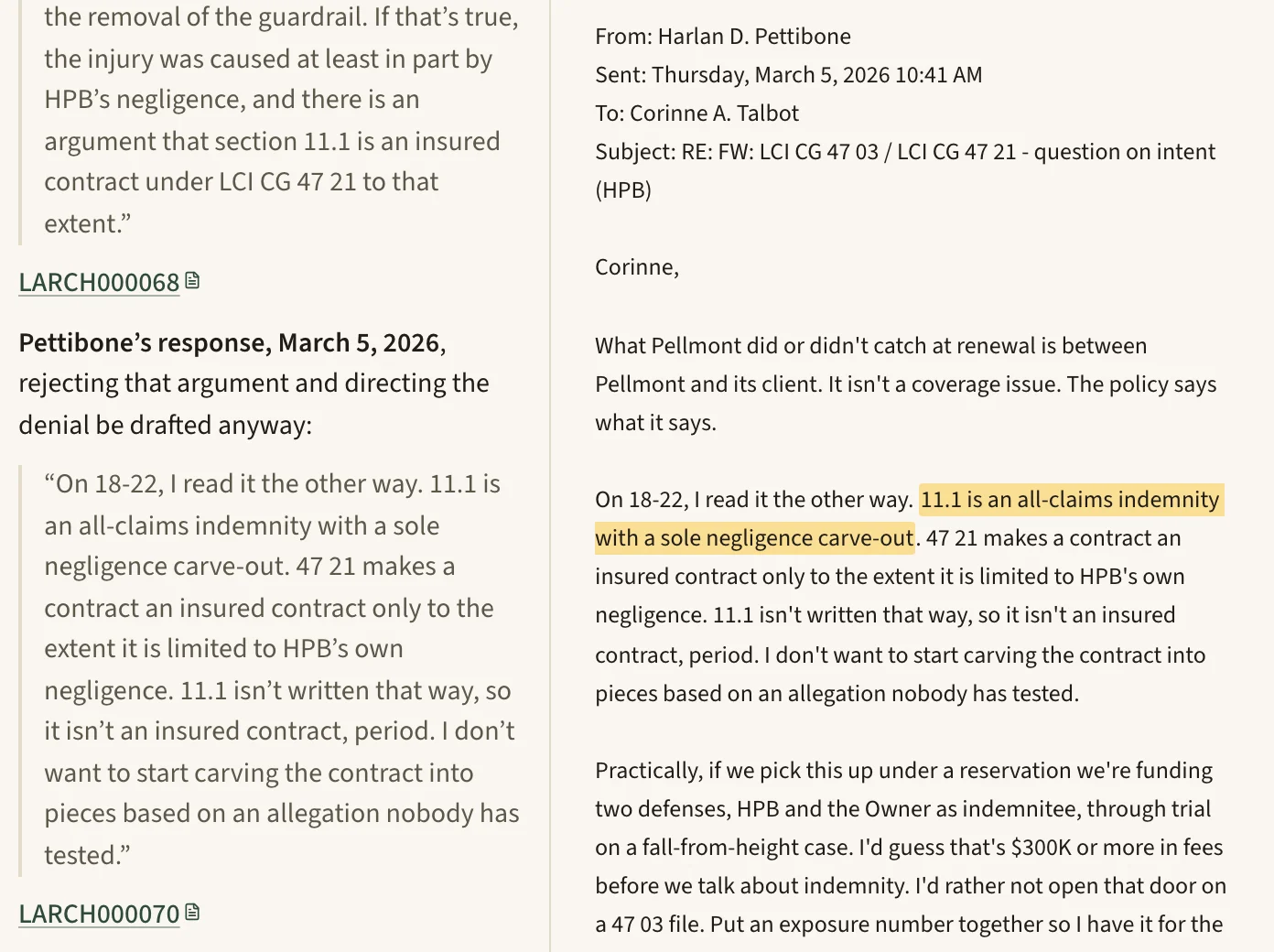
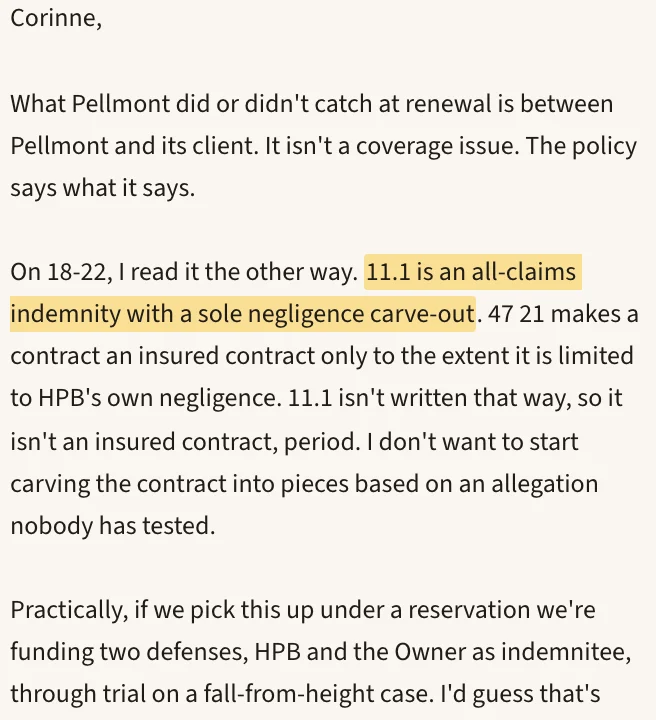
A chat answer that quotes two produced emails, with one email open in the side panel at the highlighted lines.A produced email open in the Grounds side panel, with the quoted lines highlighted.
A lawyer asks what the insurer's claims staff said about an endorsement before the denial. The answer quotes the produced emails, and each link opens its email at the quoted lines. The production and everyone in it are invented.A produced email, opened from a chat answer at the lines it quoted. The production and everyone in it are invented.
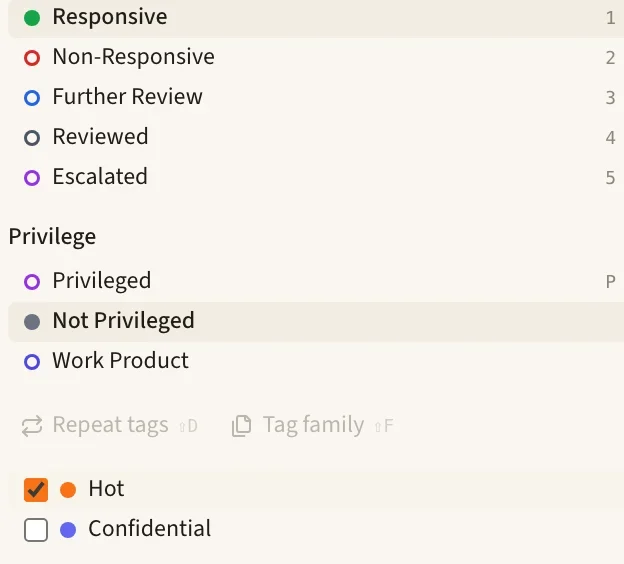
The eDiscovery coding panel for one produced email: Responsive and Not Privileged selected, and the Hot box checked.
The coding panel for Teagarden's 4 March email, LARCH000066, which a reviewer marked responsive and hot. The production is invented.

Drafts start on your firm's pleading paper, and AI edits come in as tracked changes

Upload your pleading paper once, or have Grounds adapt the caption from a filing in another matter. It rewrites the parties, court, case number and attorney lines, keeps the line numbers and the bracket column, and checks the rendered pages before you see them. Drafts are signed by the attorney you pick, with the bar number and address from your settings.

A motion can bring its declaration and proposed order with it, and a discovery set can be requests for production, admissions and special interrogatories in one go. Citations follow the style you choose: the California Style Manual, Bluebook or your own. In the editor, the AI panel proposes edits as word-level tracked changes, so you accept or reject them the way you would a colleague's.
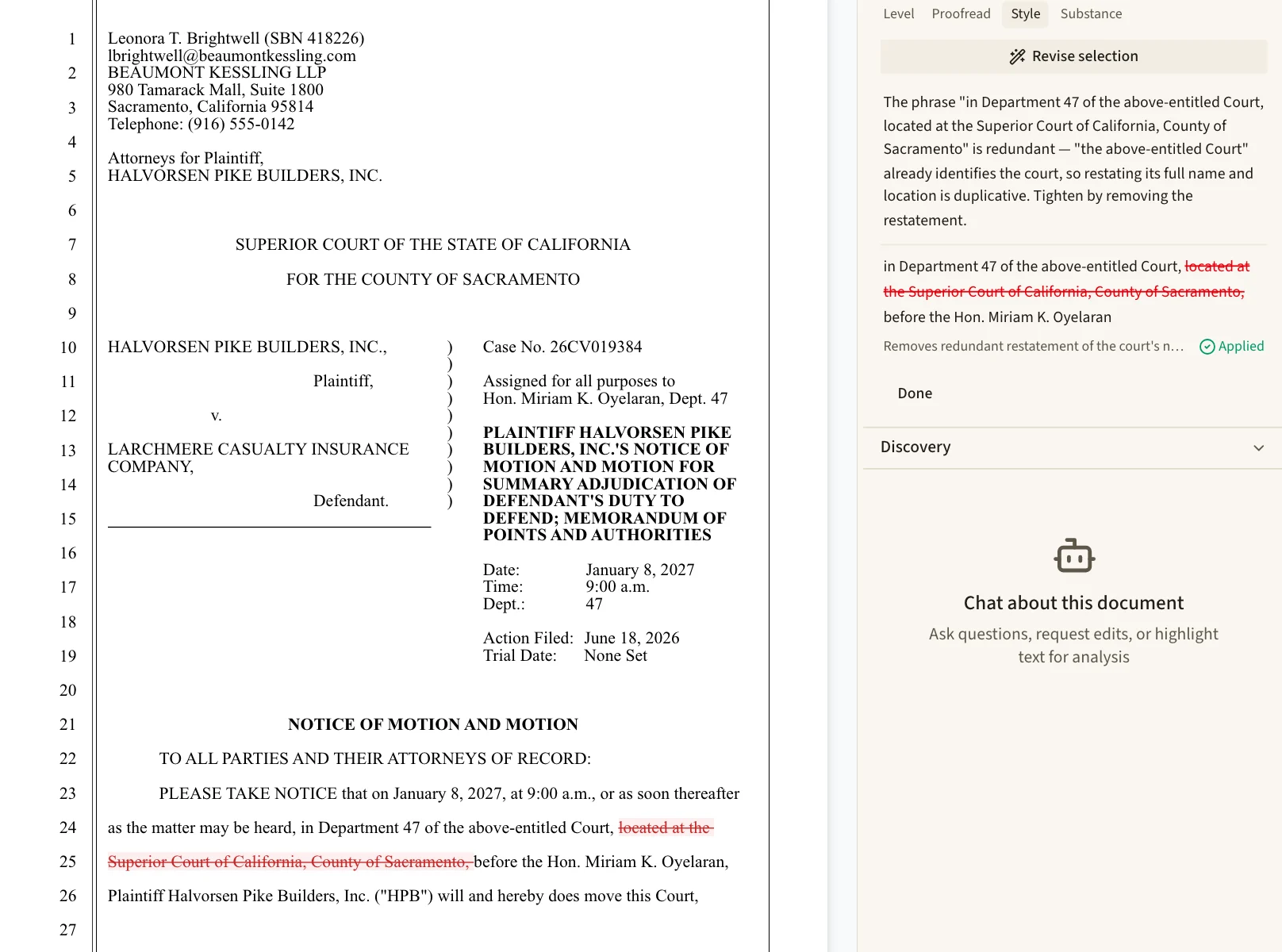
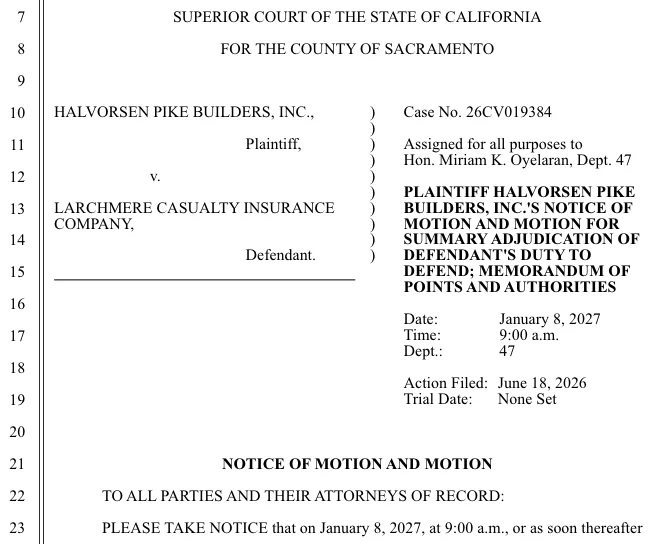
A motion on pleading paper in the Grounds editor: numbered lines down the left, the attorney block and a superior court caption at the top, and a struck phrase shown as a tracked change beside the AI panel.The caption of a motion on pleading paper: numbered lines down the left, the superior court's name, the parties beside the bracket column, and the case number and title on the right.
The first page of the motion on the firm's 28-line paper, with its caption adapted to this matter. The AI panel's edit cuts a phrase that restated the court's name, and it shows as a tracked change. Firm and matter are invented.The caption of the motion on the firm's 28-line paper, adapted to this matter. Firm and matter are invented.

Map a set of discovery requests and see what each definition pulls in

Requests for production define YOU, DOCUMENT and COMMUNICATION, and those definitions use other defined words. Map a set and Grounds lays out its definitions, instructions and requests beside the PDF, and you can read any request with its definitions read in. Contracts map the same way, with their defined terms, cross-references and the amendments that change a section. You choose which documents to map, from a matter's files or from eDiscovery.

REQUEST FOR PRODUCTION NO. 8:

The complete CLAIM FILE for each CLAIM.

Read in its 2 definitions (111 words in all)
CLAIM FILE (Definition 12) “CLAIM FILE” means every DOCUMENT created, received, or maintained by YOU in connection with any CLAIM, wherever located and however stored, including every DOCUMENT that California Code of Regulations, title 10, section 2695.3 requires YOU to maintain, all claim notes, diary and activity-log entries, reserve worksheets, coverage analyses, and committee or roundtable materials, and every DOCUMENT RELATING TO coverage for any CLAIM under the POLICY.
CLAIM (Definition 11) “CLAIM” means each of the claims to which YOU assigned claim numbers LC-26-GL-018342 and LC-26-GL-018377, and every other claim, file, or matter YOU opened RELATING TO the UNDERLYING ACTION or the TENDERS.
Read in the 6 definitions those use (371 words)
DOCUMENT (Definition 13) “DOCUMENT” and “DOCUMENTS” mean any “WRITING” as that term is defined in California Evidence Code section 250, and include every COMMUNICATION, every draft and non-identical copy, and all electronically stored information, including email, text and instant messages, claim-system entries, and associated metadata.
YOU (Definition 1) “YOU” and “YOUR” mean Defendant Larchmere Casualty Insurance Company, together with its present and former officers, directors, employees, claims personnel, underwriters, agents, and representatives, its AFFILIATES, and every other PERSON acting or purporting to act on its behalf, including any third-party administrator, independent adjuster, or consultant retained in connection with the matters described in these requests.
RELATING TO (Definition 15) “RELATING TO” and “RELATE TO” mean constituting, comprising, containing, concerning, discussing, describing, analyzing, evidencing, reflecting, referring to, supporting, or contradicting, in whole or in part.
POLICY (Definition 6) “POLICY” means Commercial General Liability Policy No. LCG-5401187-03 issued by YOU to HPB for the policy period July 1, 2025 to July 1, 2026, including its declarations, forms and endorsements schedule, coverage forms, and every endorsement attached to it or listed in it.
UNDERLYING ACTION (Definition 9) “UNDERLYING ACTION” means the action entitled Navarrete v. Quillmoor Yards Owner, LLC, et al., Sacramento County Superior Court Case No. 26CV017206, including any cross-complaint filed in that action.
TENDERS (Definition 10) “TENDERS” means (a) the tender of OWNER’s defense of the UNDERLYING ACTION to YOU, as an additional insured under the POLICY, made through Pellmont Risk & Insurance Services, LLC on or about February 6, 2026, and (b) HPB’s tender of its own defense of the UNDERLYING ACTION to YOU, made on or about February 10, 2026. “TENDER” means either of them.
Read in the last 5 (522 words)
COMMUNICATION (Definition 14) “COMMUNICATION” and “COMMUNICATIONS” mean any transmission or exchange of information between two or more PERSONS, by any means, whether oral, written, or electronic, including correspondence, email, text and instant messages, voicemail, notes or recordings of telephone calls and meetings, and postings to any shared portal or claim system.
AFFILIATES (Definition 2) “AFFILIATES” means every PERSON that directly or indirectly controls, is controlled by, or is under common control with YOU, including any parent, subsidiary, or sister company and any other member of the insurance holding company system of which YOU are a part.
PERSON (Definition 3) “PERSON” means any natural person, corporation, limited liability company, partnership, association, joint venture, trust, governmental body, or other business or legal entity.
HPB (Definition 4) “HPB” means Plaintiff Halvorsen Pike Builders, Inc., a California corporation, and its officers, directors, and employees.
OWNER (Definition 5) “OWNER” means Quillmoor Yards Owner, LLC, a Delaware limited liability company, and its manager, Calloway Hart Partners, LLC.

Request No. 8 is 7 words long, or 12 with its heading. With its definitions read in once, it is 522 words, counting the heading and each definition's number, as the map does. YOU and AFFILIATES are defined by reference to each other.
REQUEST FOR PRODUCTION NO. 8:

The complete CLAIM FILE for eachCLAIM.

Read in its 2 definitions (111 words in all)
CLAIM FILE (Definition 12) “CLAIM FILE” means every DOCUMENT created, received, or maintained by YOU in connection with any CLAIM, wherever located and however stored, including every DOCUMENT that California Code of Regulations, title 10, section 2695.3 requires YOU to maintain, all claim notes, diary and activity-log entries, reserve worksheets, coverage analyses, and committee or roundtable materials, and every DOCUMENT RELATING TO coverage for any CLAIM under the POLICY.
CLAIM (Definition 11) “CLAIM” means each of the claims to which YOU assigned claim numbers LC-26-GL-018342 and LC-26-GL-018377, and every other claim, file, or matter YOU opened RELATING TO the UNDERLYING ACTION or the TENDERS.
Read in the 6 definitions those use(371 words)
DOCUMENT (Definition 13) “DOCUMENT” and “DOCUMENTS” mean any “WRITING” as that term is defined in California Evidence Code section 250, and include every COMMUNICATION, every draft and non-identical copy, and all electronically stored information, including email, text and instant messages, claim-system entries, and associated metadata.
YOU (Definition 1) “YOU” and “YOUR” mean Defendant Larchmere Casualty Insurance Company, together with its present and former officers, directors, employees, claims personnel, underwriters, agents, and representatives, its AFFILIATES, and every other PERSON acting or purporting to act on its behalf, including any third-party administrator, independent adjuster, or consultant retained in connection with the matters described in these requests.
RELATING TO (Definition 15) “RELATING TO” and “RELATE TO” mean constituting, comprising, containing, concerning, discussing, describing, analyzing, evidencing, reflecting, referring to, supporting, or contradicting, in whole or in part.
POLICY (Definition 6) “POLICY” means Commercial General Liability Policy No. LCG-5401187-03 issued by YOU to HPB for the policy period July 1, 2025 to July 1, 2026, including its declarations, forms and endorsements schedule, coverage forms, and every endorsement attached to it or listed in it.
UNDERLYING ACTION (Definition 9) “UNDERLYING ACTION” means the action entitled Navarrete v. Quillmoor Yards Owner, LLC, et al., Sacramento County Superior Court Case No. 26CV017206, including any cross-complaint filed in that action.
TENDERS (Definition 10) “TENDERS” means (a) the tender of OWNER’s defense of the UNDERLYING ACTION to YOU, as an additional insured under the POLICY, made through Pellmont Risk & Insurance Services, LLC on or about February 6, 2026, and (b) HPB’s tender of its own defense of the UNDERLYING ACTION to YOU, made on or about February 10, 2026. “TENDER” means either of them.
Read in the last 5 (522 words)
COMMUNICATION (Definition 14) “COMMUNICATION” and “COMMUNICATIONS” mean any transmission or exchange of information between two or more PERSONS, by any means, whether oral, written, or electronic, including correspondence, email, text and instant messages, voicemail, notes or recordings of telephone calls and meetings, and postings to any shared portal or claim system.
AFFILIATES (Definition 2) “AFFILIATES” means every PERSON that directly or indirectly controls, is controlled by, or is under common control with YOU, including any parent, subsidiary, or sister company and any other member of the insurance holding company system of which YOU are a part.
PERSON (Definition 3) “PERSON” means any natural person, corporation, limited liability company, partnership, association, joint venture, trust, governmental body, or other business or legal entity.
HPB (Definition 4) “HPB” means Plaintiff Halvorsen Pike Builders, Inc., a California corporation, and its officers, directors, and employees.
OWNER (Definition 5) “OWNER” means Quillmoor Yards Owner, LLC, a Delaware limited liability company, and its manager, Calloway Hart Partners, LLC.

Request No. 8 is 7 words long, or 12 with its heading. With its definitions read in once, it is 522 words, counting the heading and each definition's number, as the map does. YOU and AFFILIATES are defined by reference to each other.
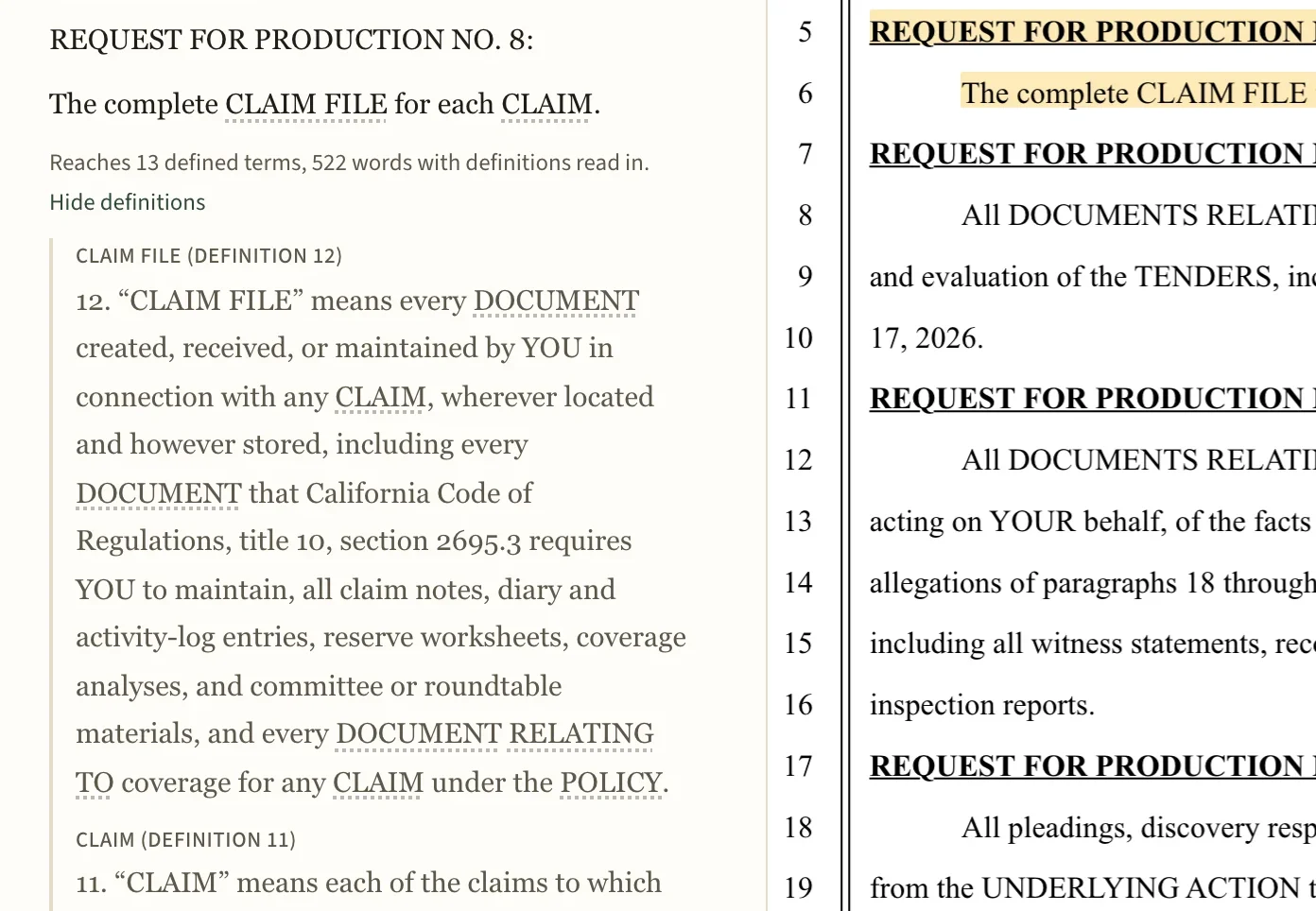
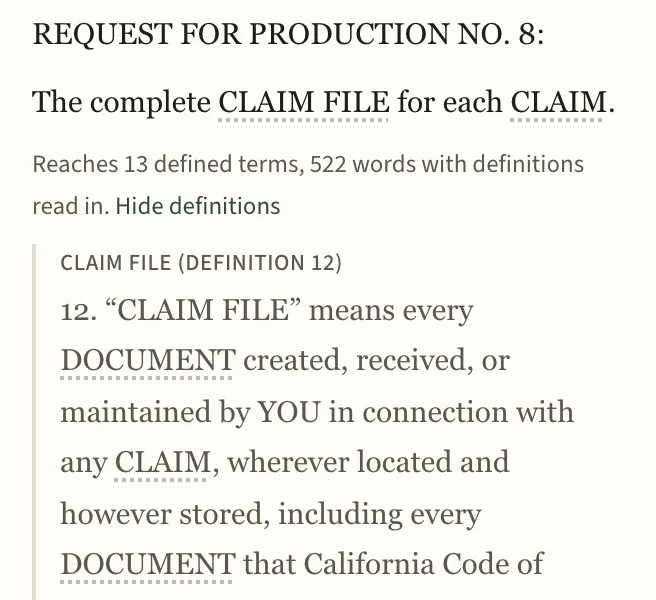
Request No. 8 from an invented set of requests for production, read in one level at a time using the set's own definitions.
A requests map: Request No. 8 with a line counting the defined terms it reaches and the words once their definitions are read in, the CLAIM FILE and CLAIM definitions set in under it, and the set's PDF on pleading paper beside it, open at the request.Request No. 8 in a requests map, with a line counting the defined terms it reaches and the words once their definitions are read in, and the CLAIM FILE definition set in under it.
The same set as a requests map: Request No. 8 read with its definitions, beside the PDF at the request.The same set as a requests map: Request No. 8 read with its definitions.
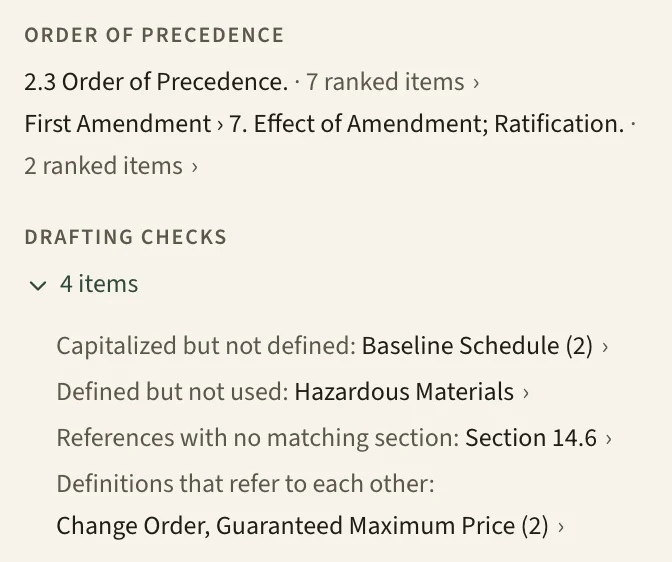
A contract map's summary: the order of precedence, naming the first amendment's ratification clause, and the drafting checks, listing a broken section reference and an undefined capitalized term.
A construction contract and its first amendment as a contract map, with the drafting checks the map found: a section reference that points nowhere and a capitalized term that is never defined.

Intake, exhibits and filing checks are part of the same workspace

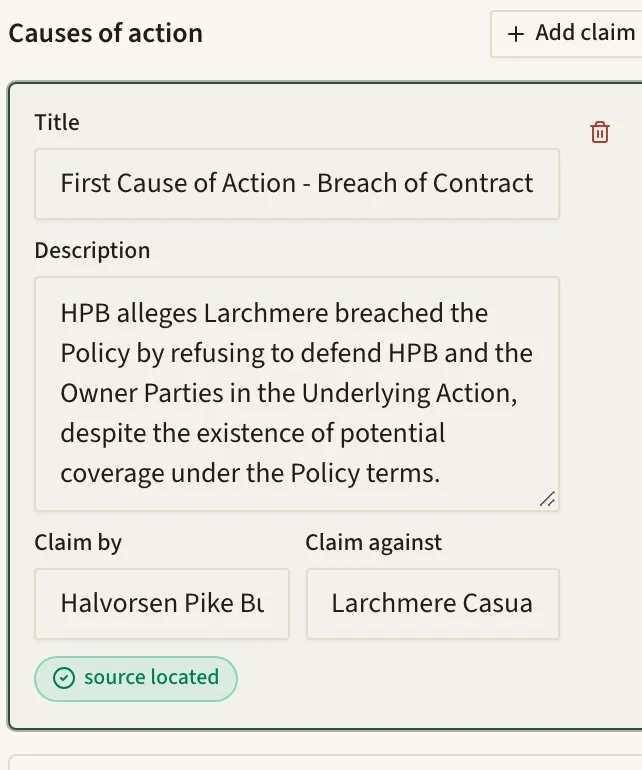
  • Upload a complaint and Grounds drafts the parties, claims, defenses and key dates, each with the page and sentence it came from. Nothing is saved to the matter until someone confirms it.
  • Build an exhibit binder with labels, slip sheets, an index and Bates numbers, then see which exhibits a brief cites that the binder doesn't have.
  • Before you file, check a PDF against common e-filing rejections, including text left under a black redaction box, with one-click fixes.
  • Review a counterparty's draft against your playbook, track each round, and generate the outgoing version with its cover email.
  • Restricted matters and ethical walls apply to the AI's tools too, so the AI won't open a walled matter for someone who can't.
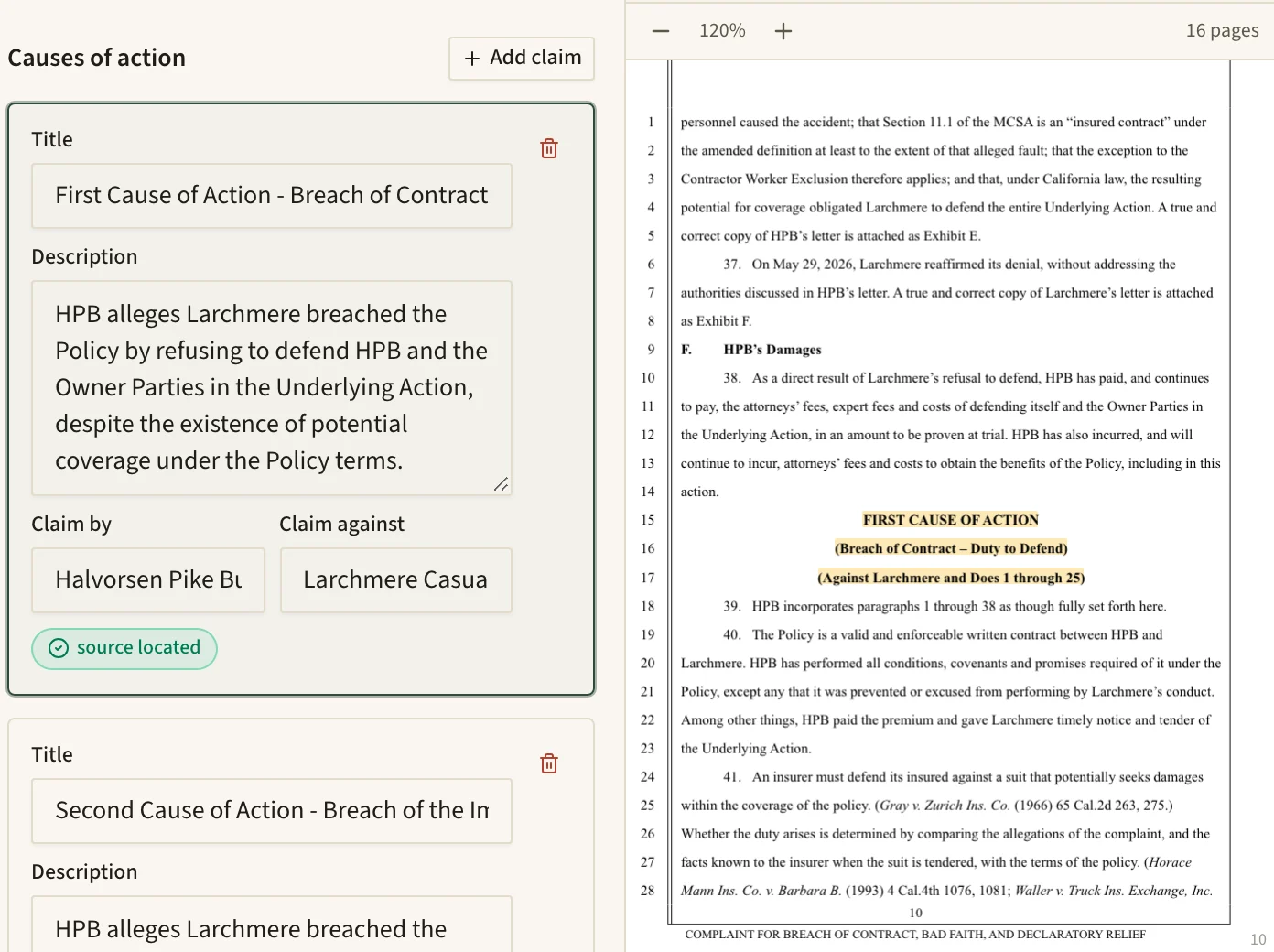
The intake review page with the extracted causes of action on the left, and the complaint on pleading paper on the right with the passage for the selected claim highlighted.The intake review card for the complaint's first cause of action, breach of contract: its title, a description, who brings the claim and against whom, and a label saying its source was located.
Intake for the invented coverage complaint: each claim beside the passage it came from, highlighted in the PDF.The first claim drafted from the invented coverage complaint, with who brings it and against whom. The passage it came from was found in the complaint.

Where your documents are kept, and who can open them

Storage
Documents and records are stored with Supabase, our database host, in the U.S. East region.
Models
Model calls run on AWS Bedrock under zero-data-retention terms, so the model provider doesn't store what you send or train on it. Web search and public case-law lookups reach other services, and only when they're used.
Encryption
Document text, summaries, chat messages and drafts are encrypted with your firm's own key before they're stored, and every query is scoped to your firm.
Access
Restricted matters and ethical walls cover pages, search and the AI's own tools. A security log records who opened, downloaded or exported each document.
Your files
Drafts download as Word files at any time, and we'll export your firm's records on request.

Tell me how your firm drafts, and what slows it down

I'm Joe Wilbert, the founder. I read every note and answer it myself.

Already have an account? Sign in.